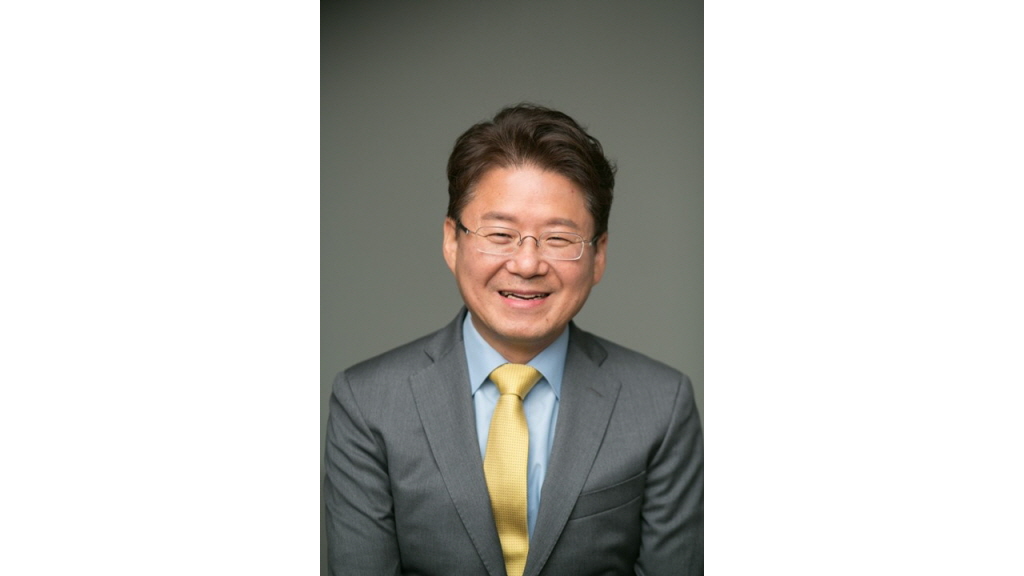
▲Professor Kim Pil-su, Department of Future Automobile Engineering, Daerim University
“We must advance the domestic used car market through transparent transactions and coexistence” It is important to have a transparent trading culture, such as the advancement of sales agents and a compensation system in case of quality problems.
The role of the Ministry of Land, Infrastructure and Transport is limited… It is necessary to create an association that combines associations, production companies and related experts.
The current domestic used car market size is approximately 2.4 million units, which is approximately 1.4 times larger than the new car market size of approximately 1.7 million units.
Although it is still at a low level compared to advanced markets such as the US and Japan, it can be said that there is sufficient potential for growth.
The number of used car transactions is around 3.8 million, but this number includes transactions between used car companies, so there are also imaginary numbers.
The used car export market also achieved over 550,000 units last year, up over 20% from the previous year, and if it has an advanced system and optimal structure in the future, it can be said that it is possible to achieve over 1 million units.
The domestic used car market began its actual business in October of last year with the decision of manufacturers such as Hyundai Motor Group to enter the used car market in 2022.
It could have started in January last year, but the used car market shrank by about 30% due to the economic downturn and high interest rates, and due to preparations, it was postponed to October. Take it as a starting point.
Currently, Hyundai and Kia are representative companies that are running used car businesses, but the effect is not yet large enough to bring the business to the surface.
Of course, it is expected that other domestic production companies will also participate depending on how the situation progresses in the future.
The domestic used car trading culture is still backward and has many issues that need to be improved.
Compared to advanced transparent cultures, there are still many shortcomings, such as false bait listings, fake party transactions, failure to notify performance inspections, and flooded vehicles.
Among consumer damage cases, the most serious and damaging area is the used car transaction situation.
To improve this, it is most important to have a transparent transaction culture like that of a new car, as well as the advancement of sales representatives and a compensation system when quality issues arise.
As there are still many consumer damages due to information asymmetry, the government and local governments must make efforts, as well as the efforts of used car organizations.
In particular, the challenges of expanding the advanced used car market must be addressed.
First of all, it is the efforts of the competent authorities.
As the Ministry of Land, Infrastructure and Transport is the lead agency, it should proactively step forward and strive to improve transparency and address problems.
In addition, the Korea Used Car Association should also take the initiative and start by organizing and establishing basic facilities such as used car development seminars.
Since there are solutions to the various problems mentioned above, with just a little effort, improvements can be made in a short period of time, and the market size can grow to over 3 million units.
In the case of the used car association, it is also necessary to refrain from selfish methods for oneself and to contribute to the advancement of the domestic used car market. Must take the lead.
Since the Ministry of Land, Infrastructure and Transport cannot do everything on its own, an association should be formed that integrates all organizations, including associations, manufacturers, and related experts.
This is a method that I always emphasized when I was the chairman of the former National Assembly's Used Car Mutual Cooperation Committee.
Second is the role of manufacturers such as Hyundai and Kia.
Regarding the designation of a livelihood industry, the Ministry of SMEs and Startups, the competent authority, approved the annual entry of automobile manufacturers in 2022, and sales will be allowed at a certain rate until next year, and from 2026, complete entry will be possible without regulations.
Currently, the production company is in its early stages and is not fully prepared, so the sales ratio is low, but it is expected to become a powerful force in the near future.
In my case, as the chairman of the negotiation team at the time, I emphasized that while it was a natural decision for the production company to enter the market, it would be a true win-win relationship through future collaborations with small and medium-sized enterprises and individual businesses.
The reason for allowing entry is that there is no OECD country that does not allow manufacturers to enter the used car transaction market, and it is thought that certified used car transactions by manufacturers can contribute to improving the negative domestic used car transaction culture, such as false bait listings, by increasing objectivity and transparency.
Naturally, this effect will be significant in the future, but in Korea, with the Hyundai Motor Group accounting for over 80% of new cars, there are concerns about the aftereffects of monopoly.
A true win-win system is important, and it is essential for the Ministry of Land, Infrastructure and Transport to closely monitor the situation.
As expected, the National Institute of Land and InfrastructureThe Korea Used Car Association, under the Ministry of Trade, Industry and Energy, may consider its role.
Third, the domestic used car market and the export used car market are completely different, yet they are related areas that cannot be separated in terms of interconnectedness.
As mentioned earlier, the export used car market is more underdeveloped and backward than the domestic market, so there is a lot of room for improvement.
Since the Ministry of Trade, Industry and Energy is in charge of the used car export sector, the two organizations and related groups can consider improving synergy by emphasizing the aspect of connectivity.
At the same time, this is an area that I, as the chairman of the Korea Used Car Export Association, always think about.
In other words, it will be about how advanced the characteristics of domestic used cars being transferred to exported used cars are positioned.
I hope that a good direction will be presented at the special session seminar on advanced export of used cars held at the International Maritime Forum hosted by Incheon Port Authority on July 4th.
Fourthly, training experts through associations is also important.
Due to the nature of the field, it is extremely difficult to train experts in the field of used cars.
You need to know the automotive engineering aspect, and also the used car trading culture where used items are repackaged and put on the market.
In addition to various related tax paperwork, you must also be aware of various intermediate processes such as used car diagnostic evaluation knowledge and used car installment.
Each of these areas is difficult, and there is also a negative perception of the culture that prevents professionals with advanced knowledge from entering the field due to the negative view of used cars.
Recently, transparency in the used car sector has been raised and is gradually changing positively, and a positive dealer culture is being formed, especially among the younger generation.There is also a human part.
It should be reborn as a proud occupation among domestic specialized occupations, fostering experts in used cars and fostering an occupation that boasts abundant sources of income. Naturally, this area can be expanded to include the area of used car exports.
It is a time when everyone must make an effort while looking forward to the future.
In particular, Hyundai and Kia, as they represent manufacturing companies, are expected to make greater efforts in terms of social contribution as well as business revitalization.
Ultimately, social contribution will lead to a virtuous cycle of market activation and expansion, which will bring about even more positive effects.